
In this lesson, we will work on cutting open the buttonholes and securing them to prevent fraying, both while working on them and during the life of the garment. https://player.vimeo.com/video/344649543 To begin with, baste around each buttonhole with a diagonal stitch to prevent all movement of the fabric layers. I like to start on one…
Responses
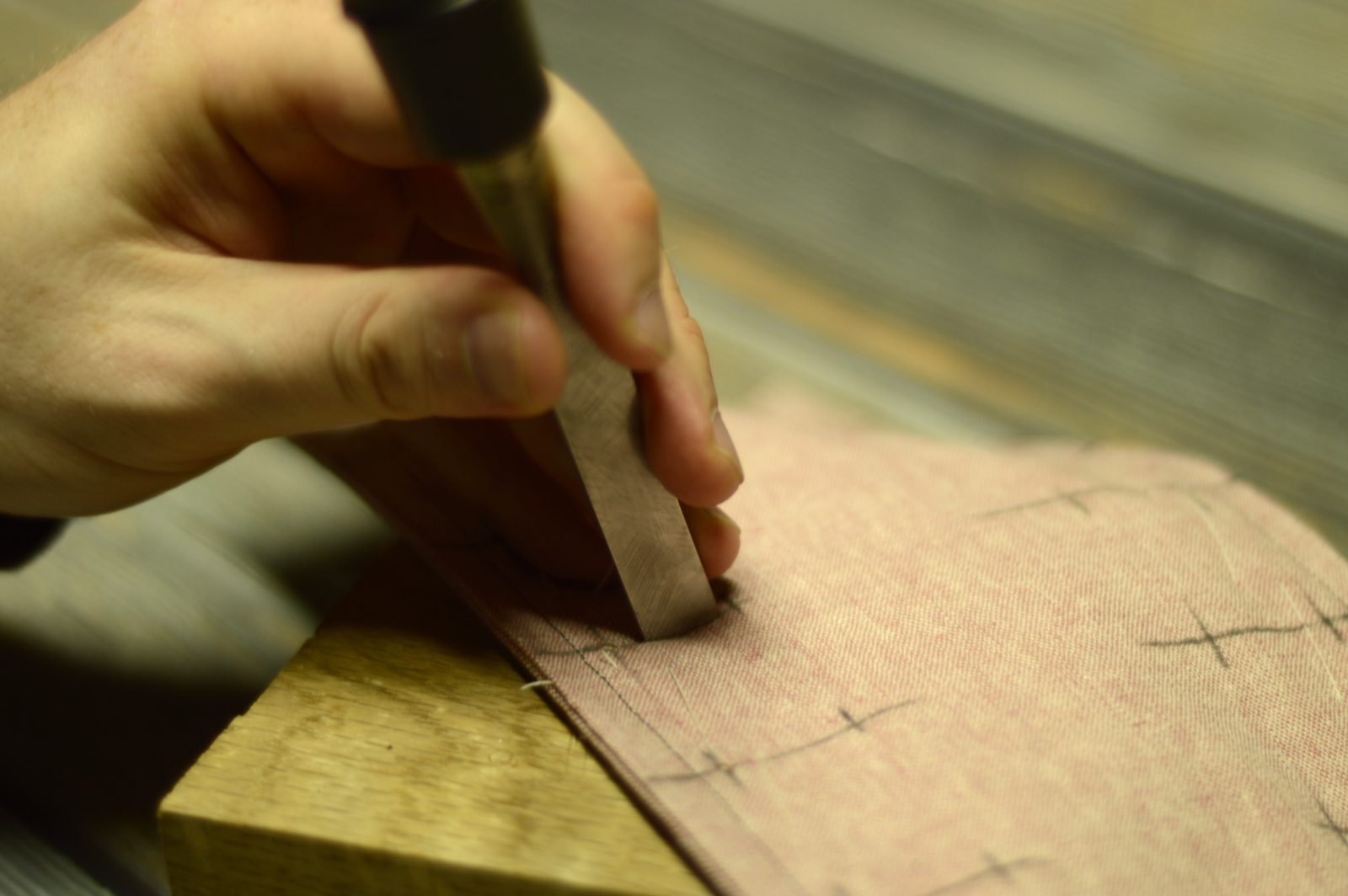
Hello James, again thanks so much for this. I have no made and basted my piece and marked the holes, am ready to cut. I have series of punches, is that a two mm punch you are using or bigger? Best wishes from Peter in Paris (France)
of course that is ‘Now made’ not no made.
Hi Peter, you’re welcome! I’m using a 1/8″ punch, so 3.175mm for you. Hope you have one in that size or somewhat close! You could probably go up to 4mm, not sure.
Hi James, I just wonder why you call this overcasting the edges “felling” .Although fell stitches are slanted, they are never executed on the edge of the fabric. that´s how I learned to distinguish felling from whipping ( or overcasting ). Maybe there is a difference between Plain sewing and Tayloring ? How do you call the stitch for the second part of a `Flat felled Seam´ ? Would you also say ” do a fell-stitch ” ? Sorry, if this sounds picky. Luckily there were pictures,that showed me what you want us to do.
Hi Petra, a yes, you are correct, I should have used overcasting here. Sometimes I get the terms mixed up in my head. For the second part of a ‘flat felled seam’, I’d call that a felling stitch. Going to update it now! Thank you.
Over the years, I did some research on handsewing, and I found, the terminology changes, get out of use, comes back with a new name to it, or gets lost altogether..And of course it depends where, when and by whom you were taught, or what books you read…
Yes, the terminology changes a lot, between countries as well. It drives me crazy sometimes, as someone who has a hard time remembering even someone’s name.
Thank you James, I have been practicing with the guidance of your Threads magazine article too. Just cannot figure out how to tie off the gimp at the end when getting ready to stitch with the buttonhole thread.
Looking forward to the next lesson. It will probably clarify my question.
Patricia
Hi Patricia, neat you found me through the article! The gimp itself is not really tied off, the wax keeps it in place well enough while I work. After the gimp is attached (the ends of the gimp are still long at this point) finish attaching the gimp with a few stitches in place at the end. Then trim the gimp.
Hope that helps,
James
So far, so good. Now for the next hurdle.
Good luck! One step at a time.